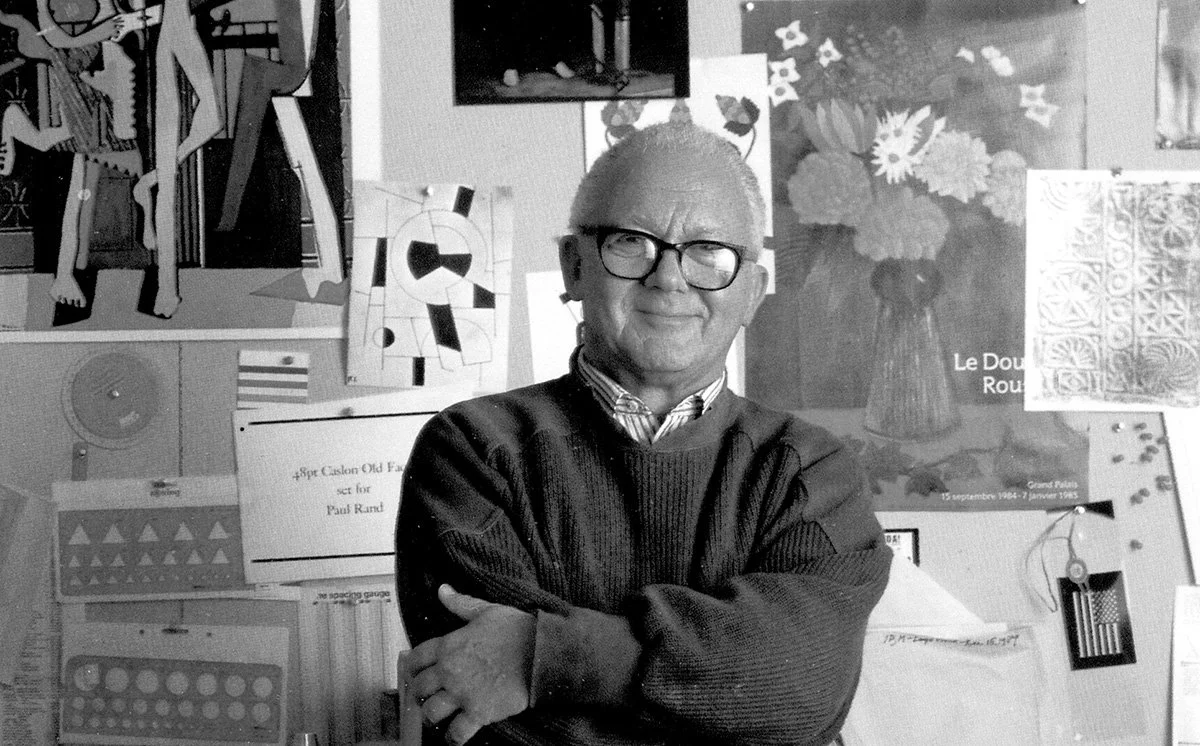
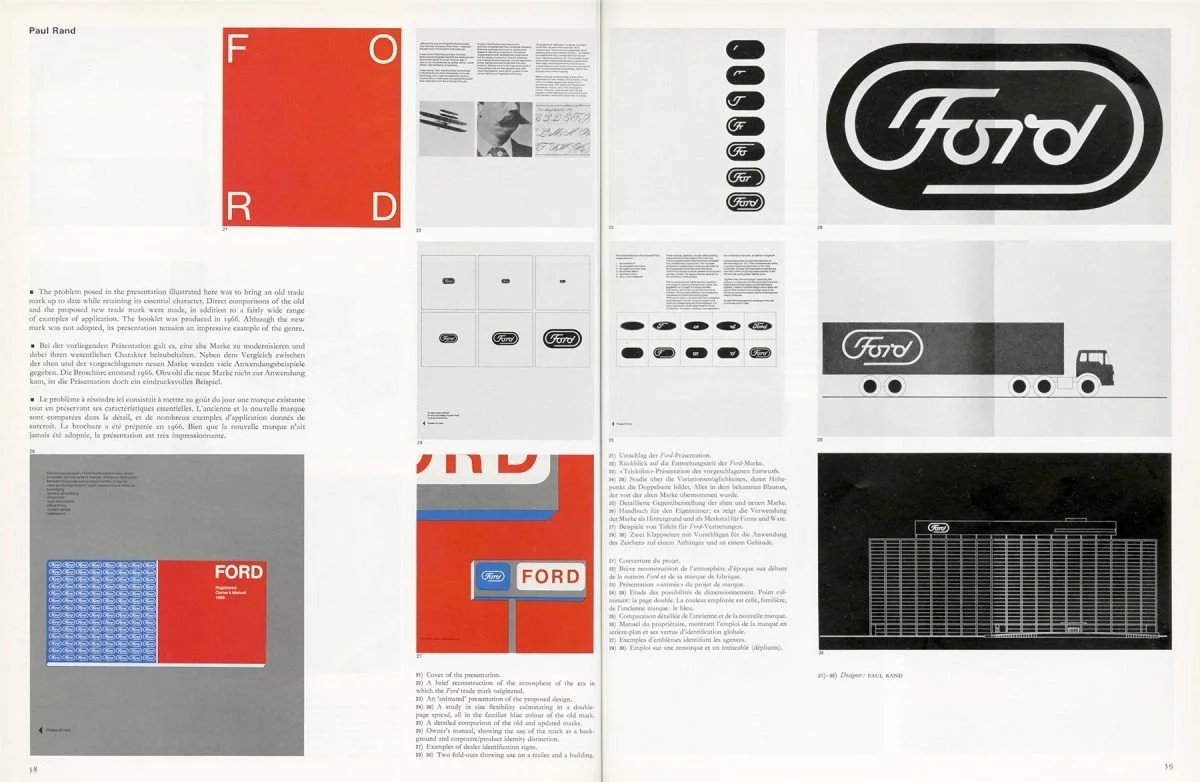
Paul Rand didn’t believe in presenting clients with endless logo options. Instead, he would arrive with one considered solution, backed by a clear rationale and a strong understanding of the problem he was trying to solve.
It’s an approach that got me thinking about how we present our work as designers, and whether giving clients more options always leads to better results.
Rand was one of the most influential graphic designers of the 20th century, responsible for creating some of the most recognisable brand identities in history, including IBM, ABC and UPS. His approach to design was rooted in the belief that good design should solve a problem, rather than simply look good. For him, the designer’s role was to understand the brief, develop a solution and communicate the thinking behind it.
His reasoning for presenting a single concept was that, when you give clients several options to choose from, the conversation can quickly shift away from the problem itself and towards personal preference. Instead of discussing why a particular direction works for the brand, the focus can become which logo someone likes the most, often based on little more than colour, shape or typography.
And I think there’s an interesting point to take from that.
Is more choice always better?
As designers, it’s natural to want to show the range of our creative thinking. Presenting multiple concepts can feel like a way of demonstrating the work that has gone into a project, giving clients a sense of choice and allowing them to explore different possibilities. But sometimes, more options can make the decision harder rather than easier.
When developing a brand identity, there should be a reason behind every creative decision, from the typography and colour palette to the overall visual direction. These decisions should connect back to the business, its audience and what the brand is trying to communicate. If we’ve taken the time to understand those things properly, our job is to use that knowledge to develop a solution that makes sense, rather than simply presenting a selection of ideas and asking the client to pick their favourite.
Of course, personal preference will always play a part in design, and there’s nothing wrong with a client having opinions about the work. But I think there’s a difference between collaborating on a creative direction and asking someone to choose between several concepts without understanding what makes each one right for their business.
Finding the right balance
Personally, I don’t think there’s a single approach that works for every project. Sometimes, exploring a few different creative directions is an important part of the process, particularly when you’re still working through the strategy and trying to establish what feels right for a brand. Exploring different routes can challenge your thinking and help uncover opportunities you might not have considered initially.
However, there’s a difference between exploring those possibilities behind the scenes and presenting a client with several finished concepts without a clear recommendation. For me, the important thing is having a reason for the direction you’re presenting and being able to explain why you believe it’s the strongest solution.
That’s where experience comes into play. As designers, we’re not just there to create something visually appealing; we’re there to bring our knowledge, perspective and creative thinking to the table. Clients come to us because they need help translating their ideas and ambitions into a brand that communicates effectively, and part of that responsibility is being confident enough to guide them through the process.
Design is about more than the finished logo
I think this is also a reminder of the value of the work that happens before a logo is even designed. Understanding a business, its audience, its positioning and what makes it different gives us a much stronger foundation for making creative decisions. When that thinking is clear, the design has a purpose, and presenting the work becomes an opportunity to communicate that purpose rather than simply show what we’ve created.
It also changes the relationship between designer and client. Instead of the client feeling as though they’re choosing a logo from a selection, the conversation becomes a collaboration around a considered recommendation. There’s still room for feedback, discussion and refinement, but everything comes back to the same question: does this work for the brand?
Ultimately, I think clients should feel involved in the process, but they should also feel confident that the designer they’re working with has a clear point of view and the experience to support their decisions.
One concept, with a clear reason behind it
Paul Rand’s approach is a good reminder that the value of design isn’t measured by the number of concepts we present, but by the thinking that goes into creating them. It’s not necessarily about always presenting one option, but about understanding why a particular solution is right and having the confidence to stand behind it.
For me, that’s what makes branding such an interesting process. It’s about taking the time to understand a business, finding the right creative direction and building an identity that feels considered, relevant and purposeful. The final logo is only one part of that process; the thinking behind it is what gives it meaning.